Making Large Silicone Moulds
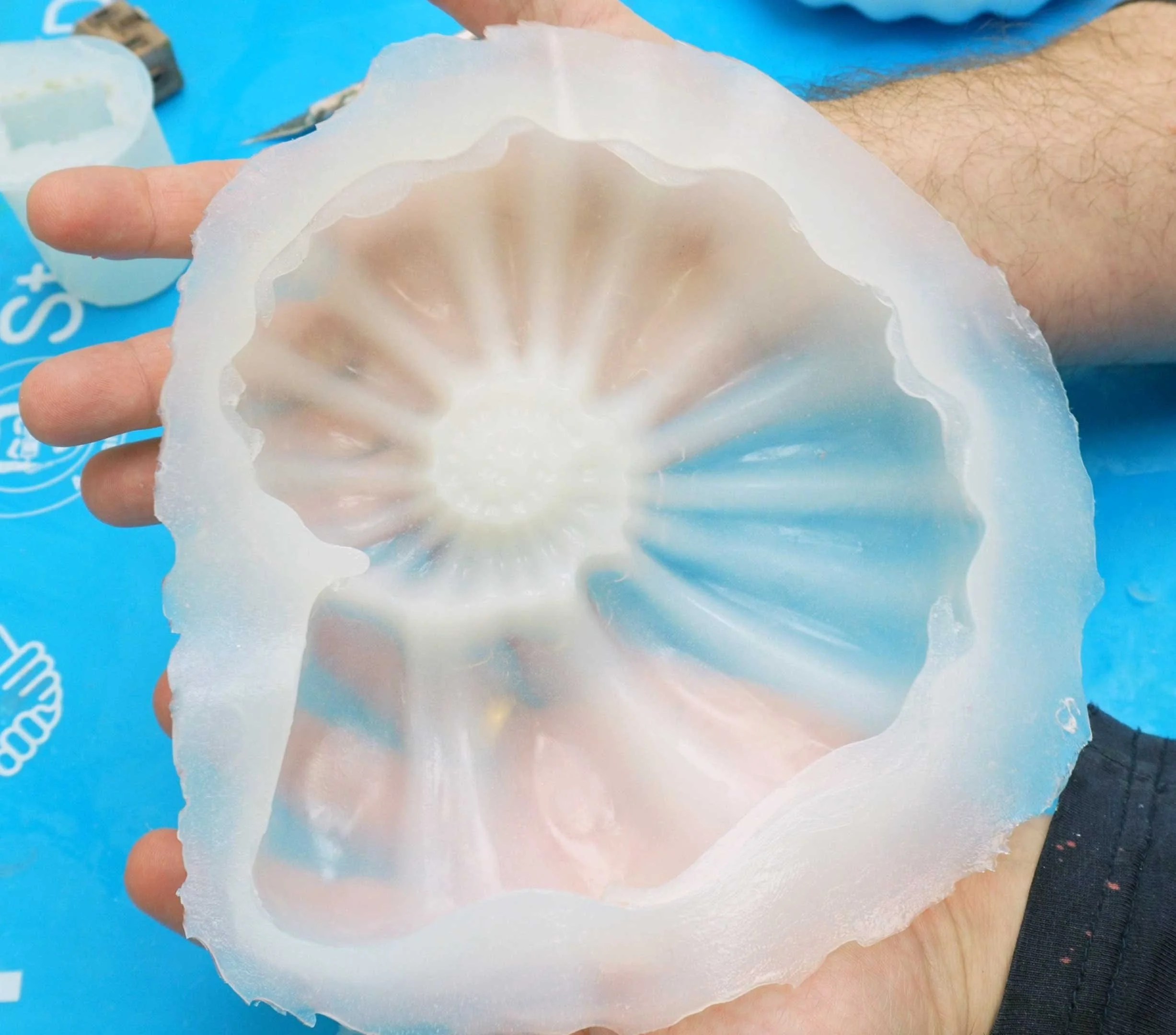
If you have ever tried to make a large silicone mould, you know it can be a costly and daunting process. Traditional "pour-in-a-box" methods use a significant amount of silicone, which can get expensive very quickly. However, there is a more efficient way to achieve professional results without the waste.
In this guide, you will learn how to use brush-on silicone to create highly flexible, translucent moulds for both small and large objects. This technique is perfect for hobbyist crafters who want to capture intricate details while saving money on materials. Whether you are working with resin, plaster, or concrete, this method provides a cost-effective solution for high-quality DIY casting.
Brush-on silicone involves applying thin layers of silicone directly onto a "blank" (the object you wish to copy) rather than submerging it in a vat of liquid. This method is ideal for creating "skin moulds" that are incredibly flexible and pick up minute textures. For larger items, we use a supporting structure, such as a sand bed, to ensure the mould keeps its shape during the casting process.
Steps
1. Prepare Your Blank
To get a glossy finish on your final cast, your original object must also be glossy. If your item is porous (like resin-crete or plaster), apply two coats of a gloss sealer. Use a sponge instead of a brush to avoid leaving brush marks. Allow the sealer to dry completely between coats, typically 24 hours for full waterproofing, though a hair dryer can speed up the surface drying.
2. Mix the Silicone
Use a two-part silicone kit with a 1:1 ratio. Weigh out equal amounts of Part A and Part B (for example, 30g of each). Mix them for about one minute, using a figure-of-eight motion and scraping the sides of the container to ensure a thorough blend. Only mix small amounts at a time, as this type of silicone cures quickly.
3. Apply the Detail Coat
The first layer is the most important. Use a silicone brush to meticulously work the mixture into all the fine details and crevices of your object. This "detail coat" prevents air bubbles from being trapped on the surface, which would ruin the final look of your cast.
4. Build Up the Layers
Wait about 10–15 minutes for the first layer to become "tacky" or cured. Apply subsequent layers to build thickness.
For small items: Four layers are usually sufficient.
For large items: Five or more layers are recommended to provide extra strength and prevent the mould from becoming too flimsy.
5. Demoulding
Once the final layer has cured (it should no longer be sticky), gently peel the silicone off your blank. Use scissors to trim any excess "flashing" or drips from the edges. It is often helpful to leave a small "lip" around the edge to help you hold the mould during casting.
6. Casting with Support
Because brush-on moulds are thin and flexible, they may sag under the weight of casting materials like resin or concrete. To prevent this, place the mould into a container filled with damp sand. The sand acts as a "mother mould," supporting the shape of the silicone so it doesn't flatten out while the material sets.
Tips
Speed Up Drying: If you are in a hurry, you can use a hair dryer on a low setting to speed up the drying time of the sealer or the curing of the silicone layers.
Clean Your Brushes: Wait for the silicone to cure fully on your brushes and mixing pots. Once cured, it will peel right off, leaving your tools clean and ready for the next project.
The First Pour: Your first "test cast" in a new mould might pick up tiny bits of dust or impurities from the blank. The second cast is usually the one that looks perfect.
Translucency: This type of silicone is often translucent, making it perfect for UV resin projects where light needs to pass through the mould to cure the resin inside.
FAQs
Does the silicone stick to everything?
Silicone generally only sticks to other silicone. It won't stick to your silicone mixing mat or your silicone brushes, making cleanup very easy. However, it will grip onto the details of your blank, which is why a smooth or sealed surface is important.
How many layers do I really need?
For most hobbyist projects, 4 layers provide a good balance of flexibility and strength. If you are worried about the mould tearing, adding a 5th layer is a safe bet.
What if my mould is too flimsy to hold its shape?
This is common with brush-on moulds. The best solution is to use a "support jacket." As shown in the guide, a bowl of damp sand is a quick and cheap way to hold the mould's shape during casting.
How long does it take for the mould to be ready?
Because this formula cures quickly, you can often have a completed mould ready to use in as little as 30 to 45 minutes.
Tools and Materials
📌 As an Amazon Associate, I earn from qualifying purchases:
(USA) Here is my amazon store for the USA
(UK) Here is my Amazon Store for the UK
Individual links below for the items used in this video:
LINKS FOR USA ONLY
(USA) ResinCrete: https://amzn.to/4tphuqN
(USA) Brush on Silicone: https://amzn.to/4tEsaSD
(USA) ResinCrete Sealer: https://amzn.to/4v2EmOn
(USA) Craft Knife: https://amzn.to/4bJsx8i
(USA) Sand: https://amzn.to/4bK1JVr
LINKS FOR UK ONLY
(UK) ResinCrete: https://amzn.to/4cffCuS
(UK) Brush on Silicone: https://amzn.to/3O0Tr26
(UK) ResinCrete Sealer: https://amzn.to/4sLcUDj
(UK) Craft Knife: https://amzn.to/4bJ7L8F
(UK) Sand: https://amzn.to/4dTJvC4